
[Photography Course for Beginners] Camera Types and Key Points When Choosing One (2) Digital Cameras
Thank you for visiting our blog! 📷
This time, I'd like to create an article for those who are planning to buy a camera.
There are various types of cameras. The two main categories are "film cameras" and "digital cameras."
Many of you probably know the difference between these two.
I will explain the key points for choosing each type for those who are just starting out.
This time, we will focus on "digital cameras."
Digital Cameras
In contrast, digital cameras save photos to memory, so you can check the images immediately after shooting.
Differences Between DSLRs and Mirrorless Interchangeable-Lens Cameras
Presence or Absence of a "Mirror"
Body Size
DSLRs

They have this traditional shape that has been around for a long time.
You can see their appearance as a serious camera.
Advantages of DSLRs
-
Optical Viewfinder
The biggest feature of DSLRs is their optical viewfinder, which allows you to compose your shot with no time lag, viewing the actual scene.
This is effective for fast-moving subjects. You can press the shutter the instant you want to capture the shot. -
Extensive Lens Lineup
Compared to mirrorless cameras, DSLRs have a longer history, so there's a wider variety of lenses available.
Depending on the manufacturer, you can even use lenses from the film era, which expands your choices significantly. -
More Shots Per Charge
When shooting with the viewfinder, the battery life is longer from a full charge. -
Focus on Shooting
Shooting with the viewfinder and the solid weight provide an immersive experience, which is a great appeal. -
Older Models Can Be Purchased Cheaply Used
Even models that were expensive when new might be found affordably on the used market.
Disadvantages of DSLRs
-
Heavy/Bulky
This can make them cumbersome to carry around.
You might even miss a photo opportunity because you didn't have it with you! -
Intimidating
Some people feel intimidated when a large camera is pointed at them, making it difficult to capture natural expressions.
DSLRs are suitable for people who:
- Want to shoot with a professional-grade camera
- Want to photograph fast-moving subjects
- Want to acquire lenses cheaply, even if used
Mirrorless Interchangeable-Lens Cameras
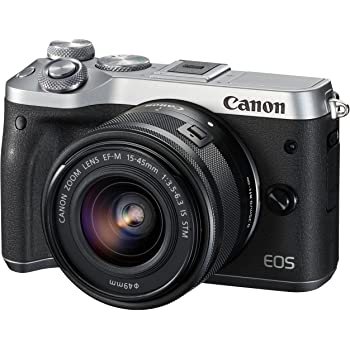
▲Type without a viewfinder
Compactly designed.

▲Type with an attachable external viewfinder

▲Type with built-in viewfinder
While their shape may resemble DSLRs, their size is significantly smaller.
Advantages of Mirrorless Interchangeable-Lens Cameras
-
Lightweight and Compact
They are designed to be relatively lightweight, making them easier to carry than DSLRs. -
Easier to Visualize the Shot Before Taking It
Since you shoot while looking at the LCD screen, you can check exposure, color tones, and other settings as you shoot. -
Some Small Models Outperform DSLRs
There are serious models with large sensor sizes and button layouts designed for professional use. -
Can Mount Various Lenses, Including Old Lenses, with Mount Adapters
Due to their structure, mirrorless cameras have the potential to mount a wide variety of lenses from all eras using adapters.
Shooting with old vintage lenses is also popular on social media (however, this is outside the manufacturer's warranty).
Disadvantages of Mirrorless Interchangeable-Lens Cameras
-
Limited Selection of Native Lenses
Compared to DSLRs, their history is shorter, so the range of interchangeable lenses is narrower.
While you can attach DSLR lenses with a dedicated adapter, they tend to be unbalanced. -
Poor Battery Life
Since the LCD screen is constantly on during shooting, battery consumption is high.
Frequent power on/off is required. -
LCD Lag
Unlike optical viewfinders, the light passing through the lens is converted into an image by a computer, and then viewed on the LCD screen, which results in a slight time lag. -
Inferior Grip
For people with large hands, many models leave fingers hanging.
Mirrorless Interchangeable-Lens Cameras are suitable for people who:
- Want to carry their camera daily
- Want to easily transition from a smartphone
- Want to try out various lenses, such as old lenses
- Want to get a trendy camera
Mirrorless Interchangeable-Lens Cameras are Popular
Summary
Whether you choose a DSLR or a mirrorless camera, you can take high-quality photos.
DSLRs offer professional shooting with their large grips and user-friendly button layouts on many models.
Mirrorless cameras range from entry-level to advanced, but their user experience can vary significantly.
It's expected that manufacturers will continue to focus on advanced mirrorless models, so cameras with a similar user experience to DSLRs will likely increase.
However, the advantage of a DSLR's optical viewfinder cannot be replicated, so it's unlikely to completely disappear.
It's best to choose a camera that suits your photographic interests, preferred user experience, and budget.
Addendum 2025
The market situation has changed considerably since this article was originally written. New DSLR models are hardly being released anymore, and mirrorless interchangeable-lens cameras have become the mainstream, with lineups ranging from flagship to entry-level models.
While I listed small size and light weight as advantages of mirrorless interchangeable-lens cameras, it's now sometimes the case that high-end mirrorless cameras are larger.
Those who want to buy a new camera and start photography will find that most options are mirrorless interchangeable-lens cameras. In the used market, you can find DSLRs, compact cameras, and mirrorless interchangeable-lens cameras, offering a wide range of choices to find what suits you.
Alps Camera Used Sales and Purchases
Also, you can ask any questions you have through our inquiry form!
We also accept used camera trade-ins.
All types of digital and film cameras are welcome!
Even old, beat-up cameras are worth inquiring about. They might have unexpected value!
Feel free to bring photos taken with your smartphone for consultation!
We also welcome inquiries by email
info@alps-camera.jp
We will provide an approximate price.
We also appraise camera accessories!
Even items that cannot be priced individually can be purchased as a bulk lot, so
feel free to bring all your unwanted items 
Please also refer to this:
⇀ "Tips for increasing your trade-in appraisal value?"
