
[Photography workshop for beginners] How to create a blurred background
This article is for beginner photographers.
*A blurred photo where it's unclear what is in focus is called "out of focus," but that's not what this refers to.
Depth of Field
Depth of field refers to the range in a photograph that appears to be in focus.
While focus is set at a single distance, a deep depth of field makes areas in front of and behind that focal plane also appear in focus.
Conversely, a shallow depth of field causes areas outside the focal plane to blur.
I will explain how to achieve a shallow depth of field in the next section.
Tips for Creating Bokeh
- Open the aperture wide
- Increase distance to background
- Use a telephoto lens
- Get closer to the subject (close-up)
Open the aperture wide
Opening the aperture as wide as possible will result in a shallower depth of field.
Also, when choosing a lens, try to select one with the smallest possible f-number.
Lens example: 50mm F1.8
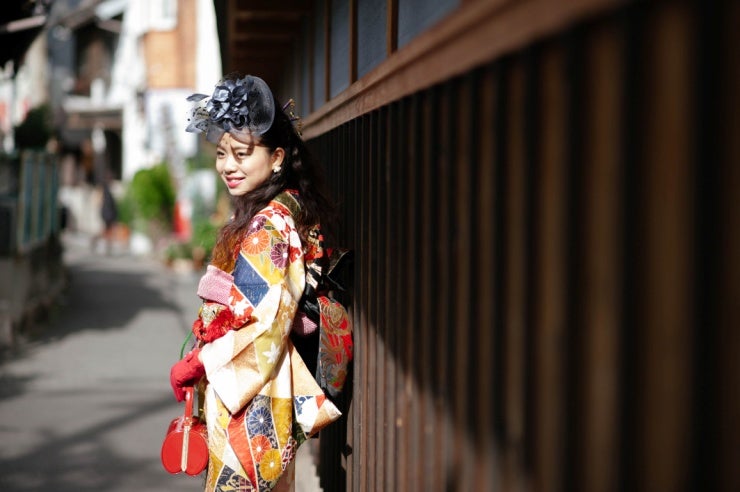
Using an 85mm F1.8 lens. The person is in focus, and the foreground and background are beautifully blurred.
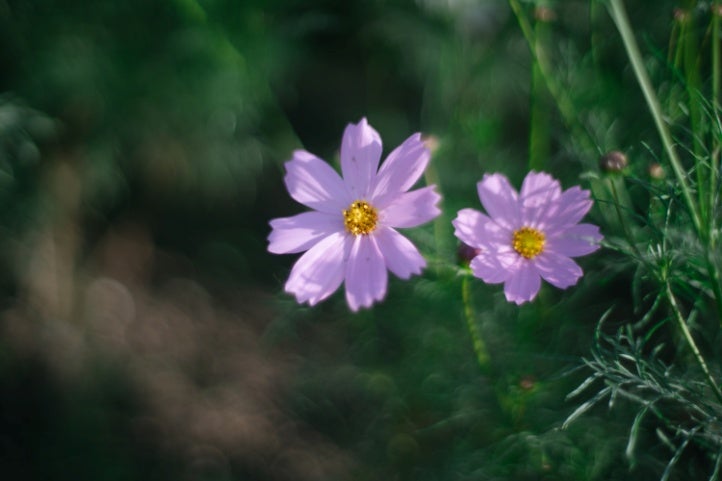
50mm F1.4
Increase distance to background
The further away the background behind your subject is, the greater the bokeh effect will be.

Left: Background is close behind. Right: Background is far away. Both photos taken under the same conditions with a 50mm lens at f/5.6.
Use a telephoto lens
Using the telephoto end of a zoom lens is also effective. The telephoto end creates a shallower depth of field than the wide-angle end.
Be careful of camera shake, as it tends to be more noticeable.
If shooting handheld, a lens with image stabilization is preferable.

Taken with the telephoto end of a zoom lens, at 75mm.
Get closer to the subject (close-up)
When shooting macro photos by getting very close to the subject, the depth of field becomes shallow.
The closer you get, the more bokeh you'll achieve, so be careful not to over-blur and adjust the aperture accordingly.
Try shooting close to your subject with a macro lens or a zoom lens with macro capabilities.
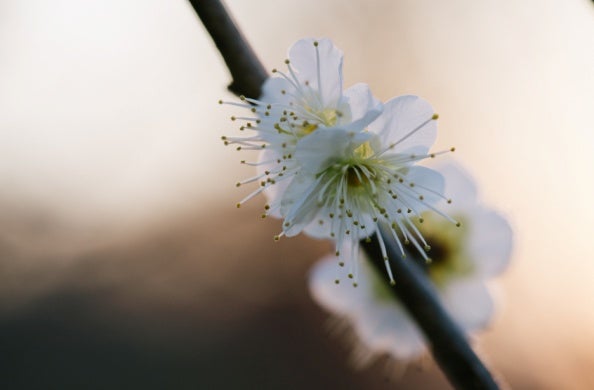
Using Micro Nikkor 105mm F2.8 macro lens
Changing lenses expands your creative possibilities infinitely.
-
Fast lenses = 50mm F1.8, 35mm F1.8, etc.
Choose prime lenses with an F-number lower than 2. -
Telephoto lenses = 85mm F1.8, 70-200mm F2.8, etc.
By shooting at the telephoto end with a wide aperture, you can create significant bokeh. -
Macro lenses = MACRO 100mm F2.8, etc.
Choose lenses with "MACRO" in their name.
*Nikon names them "Micro."
*Even if a lens has "MACRO" in its name, it may not be a true macro lens.
Check if it can achieve 1:1 magnification before purchasing.
Do full-frame sensors create more bokeh?
Alps Camera Used Sales and Purchases
Also, you can ask any questions you have through our inquiry form!
We also accept used cameras for purchase.
Digital cameras and film cameras of all types are welcome!
Even old, battered cameras are worth discussing. You might be surprised at their value!
Feel free to consult us by bringing photos taken with your smartphone!
We also welcome email inquiries.
info@alps-camera.jp
We'll provide an estimated price.
We also appraise camera-related accessories!
Even items that cannot be priced individually can be purchased in bulk,
so bring all your unwanted items 
Please also refer to this:
⇀ "Tips for Increasing Your Buyback Appraisal Value"
